

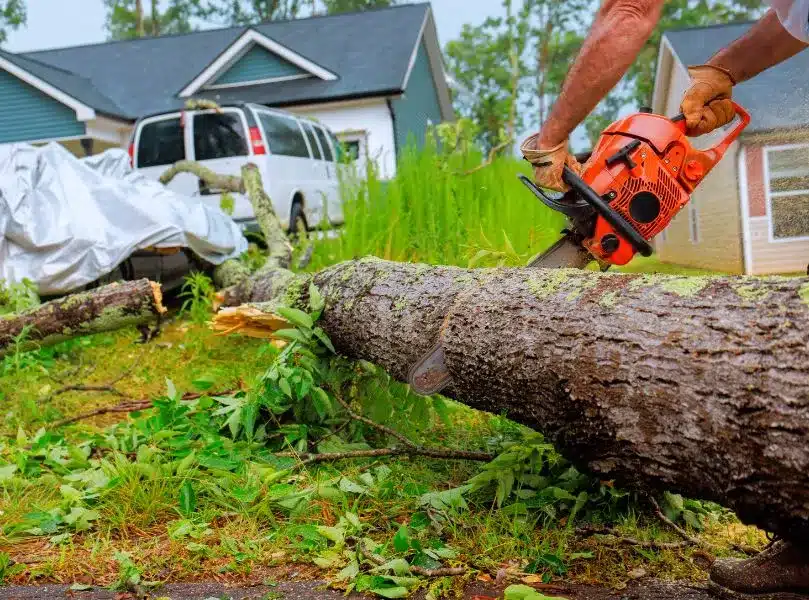
Tree Branch First Aid: How to Safely Handle Storm-Damaged Trees
Storms can leave more behind than puddles and debris—they often damage trees, snapping limbs, splitting branches, and creating hazards around your home. Knowing how to respond quickly and safely is essential. This guide to Tree Branch First Aid will help you understand what to do immediately after a storm, when to attempt basic cleanup, and when to call professionals for emergency tree branch removal, broken tree branch removal, and whole tree branch clean up.
Why Storm-Damaged Trees Are Dangerous
After severe weather, damaged trees can be unpredictable. Branches may appear stable but may be under tension, cracked, or partially detached. These “hangers” can fall without warning, posing risks to people, vehicles, roofs, and power lines. Acting carefully and knowing your limits can prevent injuries and costly property damage.
Step 1: Assess the Situation Safely
Before touching anything, take a careful look from a distance.
- Check for power lines. If a branch is tangled with electrical lines, do not approach it. This is an immediate reason to call professionals for emergency tree branch removal.
- Look for split or hanging branches. These are especially dangerous because they can drop suddenly.
- Assess the size of the damage. Small twigs and light branches are different from large limbs or cracked trunks.
If you’re unsure about stability, it’s best to pause and contact trained professionals such as a Pinellas tree service that understands local storm conditions.
Step 2: Prioritize Safety First
Tree Branch First Aid isn’t about rushing—it’s about preventing further harm.
Do:
- Wear sturdy gloves, closed-toe shoes, and eye protection.
- Keep children and pets away from damaged areas.
- Work only during daylight and clear weather.
Don’t:
- Use ladders near unstable branches.
- Stand directly beneath damaged limbs.
- Attempt cutting large branches without training.
Storm-damaged trees store energy in bent or cracked wood. One wrong cut can cause a branch to snap unexpectedly.
Step 3: When Light Cleanup Is Okay
In some cases, homeowners can manage minor tree branch clean up safely.
You may handle cleanup if:
- Branches are small, already on the ground, and easy to move.
- No cutting above shoulder height is required.
- There is no involvement with structures or utilities.
Use hand tools—not power tools—if you lack experience. Move debris away from walkways and driveways to restore safe access.
Step 4: Handling Broken Branches Still Attached
A partially attached limb is one of the most hazardous post-storm issues. Broken tree branch removal requires careful judgment.
Avoid DIY removal if:
- The branch is heavy or high up.
- The tree trunk is cracked or leaning.
- The branch is over a roof, car, or fence.
Professionals understand how to remove these limbs without causing additional damage to the tree or your property. Certified crews also know how to preserve tree health by making proper cuts that reduce the risk of disease.
Step 5: When to Call for Emergency Help
Some situations require immediate professional attention. Call for emergency tree branch removal if:
- A branch is blocking roads or driveways.
- There’s a risk of collapse onto a home.
- The tree is uprooted or severely leaning.
- Power lines are involved.
In these cases, time matters. Experienced local tree care experts have the equipment and training to handle urgent removals safely and efficiently.
Step 6: Protecting the Tree After the Storm
Tree Branch First Aid isn’t just about removal—it’s also about recovery.
After damaged branches are cleared:
- Avoid excessive pruning. Removing too much can stress the tree.
- Monitor the tree for signs of decline, such as wilting leaves or cracks.
- Schedule a professional inspection to assess internal damage.
Healthy trees can often recover well if treated correctly after storms.
Common Mistakes to Avoid
Many homeowners unintentionally make storm damage worse. Watch out for these common errors:
- Over-pruning: Cutting too much weakens the tree.
- Topping branches: This encourages weak regrowth.
- Using improper cuts: Poor cuts invite pests and disease.
- Ignoring damage: Small cracks can worsen over time.
A professional evaluation ensures long-term safety and tree health.
Preventing Future Storm Damage
While no tree is storm-proof, proactive care reduces risk.
- Regular pruning: Removes weak or dead branches before storms.
- Tree health checks: Healthy trees withstand storms better.
- Proper spacing: Trees planted too close to structures are more vulnerable.
- Professional maintenance: Ongoing care by qualified arborists strengthens trees over time.
Partnering with trusted local tree care experts ensures your trees are prepared before the next storm hits.
Why Professional Tree Services Matter
Tree work is one of the most dangerous home maintenance tasks. Professionals bring:
- Specialized safety equipment
- Knowledge of tree biology
- Experience handling storm-damaged trees
- Insurance coverage for peace of mind
Whether it’s routine tree branch clean up or urgent emergency tree branch removal, trained crews reduce risk and protect your property.
Smart Tree Branch First Aid
Storm-damaged trees demand respect and caution. While light cleanup can sometimes be handled safely, larger or more complex damage should always be left to professionals. By assessing risks carefully, prioritizing safety, and knowing when to call a Pinellas tree service, you can protect your home, your family, and your landscape.
Tree Branch First Aid isn’t about doing everything yourself—it’s about making the right call at the right time. With thoughtful action and expert help when needed, your trees can recover and continue to provide beauty, shade, and value for years to come.