

Winter Tree Care Tips for Homeowners in Pasco
As the temperatures drop across the Tri-Cities and the last leaves fall from the trees, many homeowners in Pasco assume their landscaping chores are finished for the season. However, winter is a critical time for your trees’ health and safety. The harsh winds, frozen soil, and fluctuating temperatures of the Columbia Basin can put significant stress on your landscape. Taking proactive steps now can mean the difference between a vibrant, healthy yard next spring and a costly cleanup of fallen limbs.
Whether you have mature evergreens providing privacy or young shade trees you recently planted, understanding how to protect them during the colder months is essential. For tasks that require climbing or specialized equipment, relying on professional tree care services ensures the job is done safely. But there are also several things you can do yourself to help your trees survive until spring.
Why Winter is the Ideal Time for Tree Trimming
Many homeowners are surprised to learn that winter is often the best time of year for tree trimming. While it might seem counterintuitive to cut on a tree during the coldest months, dormant pruning offers several distinct advantages.
First and foremost, when deciduous trees lose their leaves, their skeletal structure becomes clearly visible. This allows you or a professional arborist to easily spot dead, diseased, or crossing branches that might have been hidden by foliage. Removing these hazards now prevents them from snapping under the weight of heavy snow or ice later in the season. Furthermore, because the tree is dormant, it is not actively moving nutrients between its roots and canopy. This means pruning cuts are less stressful to the tree, and the risk of spreading disease is significantly lower since most pests and fungi are inactive .
Proper tree trimming also improves the airflow and sunlight penetration through the canopy. This not only improves the tree’s overall structure but also reduces the likelihood of fungal infections developing in the dense, damp conditions of early spring.
Protecting Trunks from Sunscald and Wildlife
Pasco winters often feature bright, sunny days followed by freezing nights. This freeze-thaw cycle can cause a condition known as “sunscald” or “southwest injury” on the trunks of young or thin-barked trees like maples, cherries, and aspens. The sun warms the bark during the day, causing cells to become active, only for them to freeze and rupture when the temperature plummets at night. This leads to vertical cracks in the bark that can invite pests and disease.
To prevent this, consider installing tree wraps or guards around the trunks of vulnerable trees. You can use commercial tree wrap or even create a guard from white corrugated drainage pipe, which reflects the sunlight and insulates the bark . It is crucial to remember to remove these guards in the spring to avoid trapping moisture against the trunk.
Additionally, winter is a time of scarcity for wildlife. Voles, rabbits, and deer often turn to tree bark for food when other sources are covered in snow. A sturdy tree guard made of hardware cloth or wire mesh around the base of the tree can prevent animals from girdling and killing your young trees .
The Importance of Deep Watering and Mulch
Even though your trees are dormant, they still need water. In the semi-arid climate of the Tri-Cities, winter drought can be just as damaging as the cold. Evergreens, in particular, continue to lose moisture through their needles during winter winds. If the ground is frozen or dry, the roots cannot replace that moisture, leading to winter burn and brown needles .
Before the ground freezes solid, give your trees—especially newly planted ones—a deep, slow watering. Focus on the root zone, which extends well beyond the trunk. Once the soil is hydrated, apply a fresh layer of organic mulch. A two-to-four-inch layer of wood chips or bark mulch acts as an insulating blanket, keeping soil temperatures stable and preventing the freeze-thaw cycle from heaving roots out of the ground . Just be sure to keep the mulch a few inches away from the trunk to prevent rot.
When to Call a Professional Tree Care Service
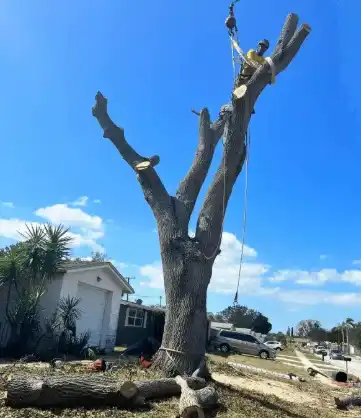
While inspecting and watering are great DIY tasks, the structural health of your trees often requires a trained eye and professional equipment. Pasco is home to a variety of reputable tree care services that can handle the dangerous work of removing large limbs or assessing hazardous trees.
If you notice a large branch hanging precariously over your roof or power lines, do not attempt to remove it yourself. Winter conditions make working at heights incredibly dangerous. A professional arborist has the safety gear, insurance, and expertise to remove the hazard without damaging your property . Many local companies offer 24/7 emergency services for storm damage, which can be a lifesaver during a winter windstorm .
Furthermore, a certified arborist can identify structural weaknesses that you might miss. They can install cables or braces to support weak branches, or determine if a tree has become a liability that needs removal. Investing in professional tree care services now can save you from property damage and expensive emergency repairs later .
A Little Preparation Goes a Long Way
Caring for your trees in winter is an investment in the future beauty and safety of your Pasco home. By pruning dormant branches, protecting trunks from the sun and wildlife, and ensuring your trees are well-hydrated, you set the stage for a robust growing season. While you can handle the basic maintenance, never hesitate to reach out to local tree trimming and tree care services for the heavy lifting. Your trees will thank you with shade, beauty, and value for years to come.