

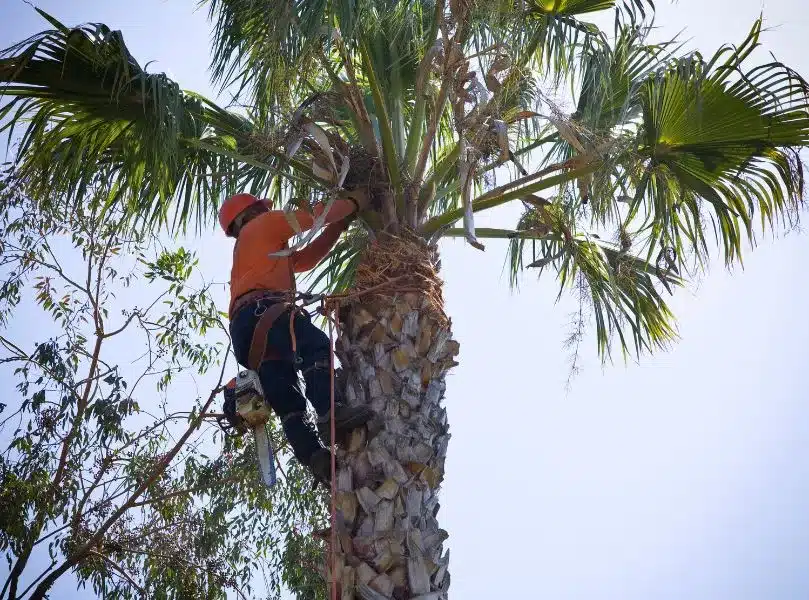
When to Skin, Trim, or Remove a Palm Tree: Expert Tips and Best Practices
Palm trees are a beautiful and iconic part of Florida landscapes. They add curb appeal, provide shade, and create a tropical aesthetic that homeowners love. However, proper palm maintenance is essential to keep your trees healthy, safe, and visually appealing. Many property owners often wonder: Should I skin it, trim it, shave it, or remove it entirely?
Understanding the difference between palm tree skinning, trimming a palm tree trunk, shaving palm trees, and full removal can help you make the right decision for your property.
In this blog, we’ll explain when each service is appropriate, the benefits and risks, and why professional help is critical — especially if you’re searching for tree service in Pasco County, Florida.
Understanding Palm Tree Skinning
Palm tree skinning refers to the removal of old, dead frond bases (also called boots) from the trunk. Over time, these bases dry out and remain attached to the trunk, giving the palm a rough, layered appearance.
When Should You Consider Palm Tree Skinning?
- When you want a clean, smooth trunk appearance
- When dead frond bases are attracting pests
- When loose boots create falling debris hazards
- For aesthetic upgrades in commercial or upscale residential properties
Palm tree skinning is primarily cosmetic, but it can also reduce hiding spots for insects and rodents.
How to Skin a Palm Tree (And Why Professionals Should Do It)
Many homeowners search online for how to skin a palm tree, thinking it’s a simple DIY task. In reality, it requires proper tools, safety equipment, and experience.
Skinning typically involves:
- Carefully cutting away old frond bases
- Avoiding damage to the live trunk tissue
- Using climbing equipment or lift systems
- Properly disposing of debris
Improper skinning can cause permanent trunk damage, weaken the tree, and even introduce disease. Overcutting into the trunk tissue may compromise the palm’s structural integrity.
That’s why it’s best to hire experienced professionals offering Hillsborough County tree removal services who understand proper techniques and local safety standards.
What Is Shaving Palm Trees?
Shaving palm trees is often used interchangeably with skinning, but technically, it refers to aggressively removing both the bark and additional outer trunk layers to create an ultra-smooth finish.
When Is Shaving Palm Trees Appropriate?
- Luxury properties seeking a manicured appearance
- Commercial landscapes
- HOA communities with strict visual standards
However, over-shaving palm trees can stress the trees. Unlike hardwood trees, palm trunks don’t regenerate bark. Once damaged, the trunk cannot heal the same way.
Best Practice: Only remove dead material and avoid cutting into live trunk tissue.
Trimming a Palm Tree Trunk vs. Trimming Fronds
Many homeowners confuse trimming a palm tree trunk with trimming palm fronds. These are very different services.
Palm Frond Trimming
This involves removing:
- Dead or yellowing fronds
- Broken or storm-damaged fronds
- Overgrown fronds blocking structures or power lines
Regular trimming improves safety and appearance.
Trimming a Palm Tree Trunk
This refers to removing boots or shaping the trunk for aesthetic reasons.
It’s important not to over-trim palm fronds. A common mistake is “hurricane cutting,” where too many green fronds are removed. This weakens the tree and can stunt growth.
Professional arborists typically recommend removing only completely dead or dying fronds.
When Should You Remove a Palm Tree?
While maintenance is often enough, sometimes full removal is necessary.
You may need removal if:
- The tree is dead or dying
- It has severe disease
- The trunk is structurally compromised
- Roots are damaging foundations or pipes
- The palm is leaning dangerously
- Storm damage has weakened stability
In Florida, hurricane season can expose weak trees. A compromised palm can fall and cause serious property damage.
If you are searching for tree service Pasco County, Florida, removal specialists can assess whether your palm can be saved or must be removed.
Signs Your Palm Tree May Be Unhealthy
Watch for these warning signs:
- Brown or collapsing crown
- Fungus growth at the base
- Soft or hollow trunk areas
- Significant lean after storms
- Continuous shedding of large trunk sections
Ignoring these symptoms can lead to safety hazards.
Safety Considerations
Palm tree maintenance isn’t just about appearance — it’s about safety.
Risks include:
- Falling fronds (which can weigh 20–50 pounds)
- Falling boots during skinning
- Climbing hazards
- Power line interference
- Improper tool usage
Professionals have the right equipment, including harnesses, lifts, chainsaws, and protective gear. Attempting to DIY skin or remove a tall palm can result in severe injury.
Environmental & Local Regulations
In counties like Hillsborough and Pasco, tree removal may require permits depending on:
- Tree size
- Species
- Location
- Protected tree ordinances
Before scheduling Hillsborough County tree removal, verify local regulations to avoid fines.
A licensed tree service will:
- Check county requirements
- Obtain necessary permits
- Ensure compliant disposal
Cost Considerations
Costs vary based on:
- Tree height
- Accessibility
- Proximity to structures
- Equipment required
- Debris removal needs
Skinning and trimming are generally more affordable than full removal. However, delaying necessary removal can increase risks and long-term costs.
Best Practices for Palm Tree Care
Here are expert recommendations:
1. Trim Annually
Schedule routine maintenance once per year, especially before hurricane season.
2. Avoid Over-Pruning
Never remove healthy green fronds unnecessarily.
3. Inspect After Storms
Check for cracks, leaning, or loose trunk sections.
4. Hire Certified Professionals
Improper trimming or skinning can shorten the life of your palm.
5. Prioritize Safety Over Aesthetics
A smooth trunk looks great — but not at the expense of tree health.
Skin, Trim, or Remove: How to Decide
Here’s a quick breakdown:
| Situation | Recommended Service |
| Tree is healthy but unsightly | Palm tree skinning |
| Dead fronds present | Frond trimming |
| Trunk boots loose | Skinning or shaving |
| Severe lean or disease | Removal |
| Structural instability | Removal |
When in doubt, consult a professional tree service provider in Pasco County, Florida, for an on-site evaluation.
Palm trees are a valuable feature of Florida properties — but they require proper maintenance to remain safe and beautiful. Whether you’re considering palm tree skinning, wondering how to skin a palm tree, evaluating shaving palm trees, or thinking about trimming a palm tree trunk, the right approach depends on the tree’s condition and your property’s needs.
If the tree poses a safety risk, professional Hillsborough County tree removal services may be the safest and smartest option.
Regular maintenance protects your investment, enhances curb appeal, and prevents costly storm damage. Don’t wait until a minor issue becomes a major hazard — schedule a professional evaluation and keep your palm trees healthy year-round.
For regular upkeep see our tree trimming services, licensed and insured crews across Pasco County.
Need a crew? Morris Tree Service provides palm tree trimming in Pasco County with free estimates. Call (727) 326-4337.